Winter vs. Summer Weather on San Francisco Bay: Different Seasons, Different Kinds of Magic
Anyone who sails San Francisco Bay regularly learns quickly that “winter” and “summer” don’t mean the same thing here as they do in most other places. As both a meteorologist and a longtime Bay sailor, I’ve come to think of the seasons less as better or worse, and more as different operating modes of the same remarkable system. Each season brings its own weather patterns, textures, and rhythms—none inherently superior, just tuned to a different balance of pressure, wind, and temperature.
Understanding those differences not only makes you a better sailor, it also opens the door to enjoying the Bay year-round rather than waiting for a narrow window you think of as “the sailing season.”
The Big Picture: Pressure Patterns Drive Everything
The defining difference between winter and summer on the Bay starts far offshore.
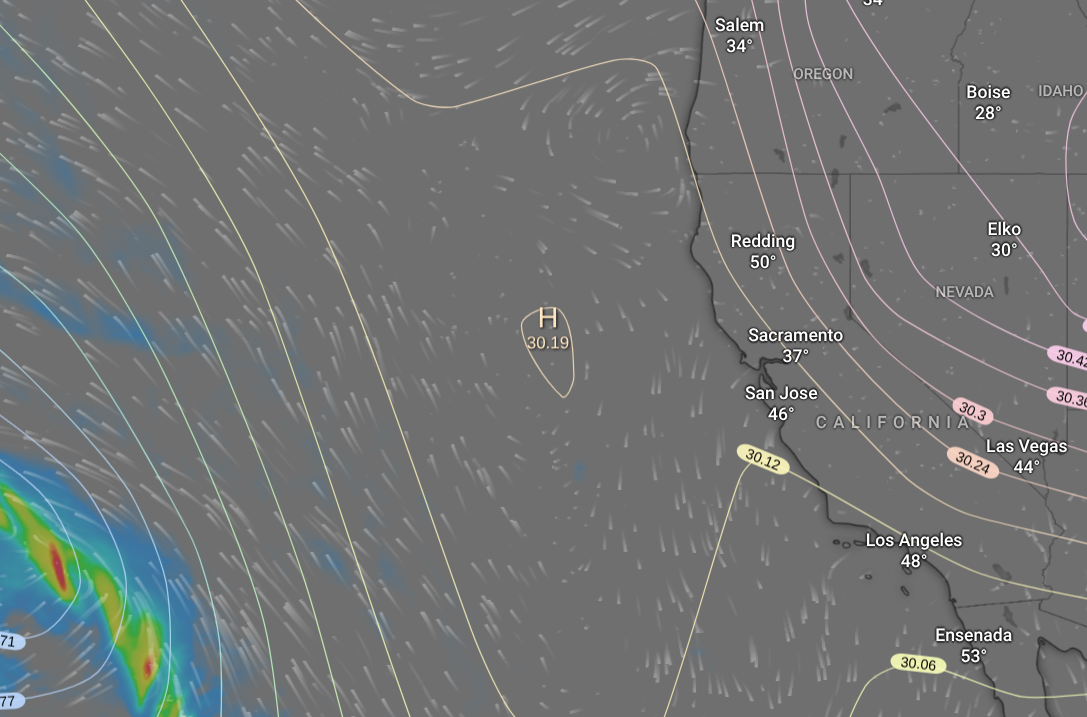
Winter is dominated by shifting high- and low-pressure systems moving in from the Pacific.
Summer is governed by a semi-permanent high-pressure system offshore combined with intense inland heating.
These large-scale patterns determine wind strength, cloud cover, temperature, and even how “busy” the Bay feels on the water.
Winter on the Bay: High Pressure Days Are the Secret
Winter has an undeserved reputation among non-sailors. People hear “winter” and imagine cold, rain, and miserable conditions. In reality, winter on the Bay is a season of contrast.
When Storms Are Present
Yes, winter is when we get our rain. Passing cold fronts bring wind shifts, showers, and occasionally strong southerlies. As sailors, we respect those systems, track them carefully, and simply don’t sail when they’re unsafe. That’s part of seamanship, not a drawback.
When High Pressure Takes Over
Between storms, something special happens.
When a high-pressure system dominates:
Skies clear dramatically
Winds often ease or become moderate and predictable
The sun, even at a lower angle, provides real warmth
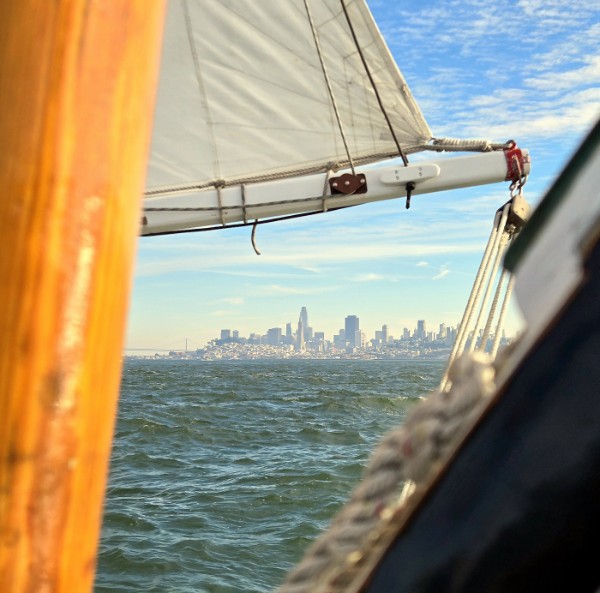
Visibility can be extraordinary—crisp, long-range views of the Marin Headlands, Angel Island, and the city skyline
These are the winter days that surprise people. With the sun out and the wind lighter, it can feel genuinely warm and pleasant on the water—often more comfortable than expected, especially when you’re moving under sail rather than standing still ashore.
From a meteorological standpoint, these days occur because subsiding air in high pressure suppresses cloud formation. From a sailor’s standpoint, they’re gold: smooth air, fewer whitecaps, and a relaxed rhythm that invites longer tacks and unhurried exploration.
Winter Wind Character: Softer, More Variable
Compared to summer, winter winds:
Are generally lighter on average
May shift more with passing systems
Often align with synoptic patterns rather than daily thermal cycles
This means winter sailing rewards attentiveness and flexibility rather than brute wind-handling. It’s an excellent season for:
Comfortable cruising
Introducing new sailors to the Bay
Enjoying the boat without constant sail changes
Summer on the Bay: The Thermal Engine
Summer weather on San Francisco Bay is famous worldwide, and for good reason. It is remarkably reliable—but it’s driven by a very different mechanism.
The Inland Heat Pump
As California’s Central Valley heats up, air rises inland. Cooler marine air is pulled in through the Golden Gate to replace it. This creates the classic summer pattern:
Strong afternoon westerlies
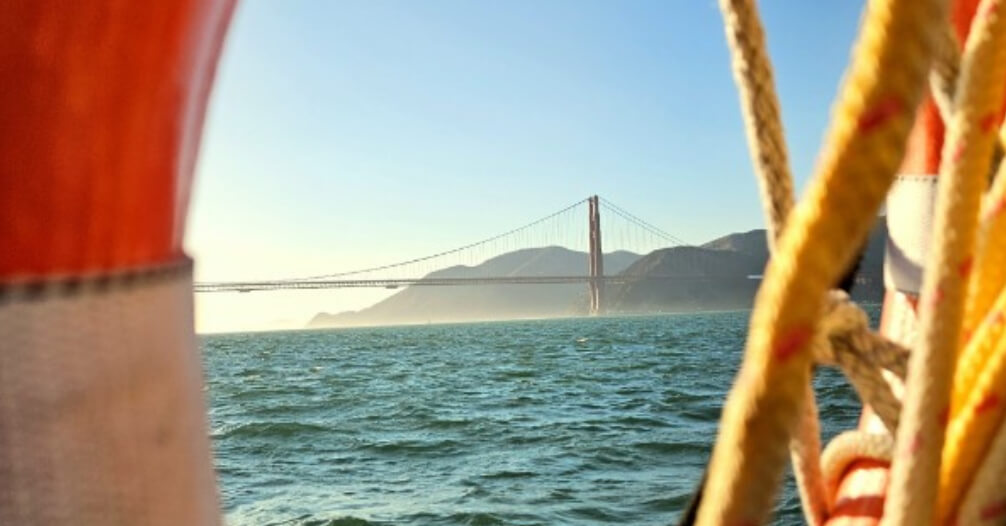
Frequent fog near the Gate and along the city front
Clearer skies farther north and east
This is not bad weather—it’s purpose-built sailing weather.
Summer Wind Personality
Summer winds are:
Stronger and more consistent
Most reliable in the afternoon
Ideal for performance sailing and experienced crews
For sailors who love feeling the boat dig in and stretch her legs, summer delivers day after day. Reefing, trimming, and boat handling become part of the fun rather than a response to surprise.
Fog: A Feature, Not a Flaw
Fog is often cited as a summer negative, but it’s really just another expression of the same system. Cold ocean water meets warm air, and fog forms. To sailors, fog:
Is usually shallow and predictable
Moves rhythmically with wind and tide
Adds drama and mystery to familiar waters
Winter, by contrast, often offers clearer skies—but again, different, not better.
Temperature: Perception vs. Reality
Here’s one of the most counterintuitive truths about Bay weather:
Winter sunny days can feel warmer on the water than summer foggy days.
In summer, strong winds strip heat away, and fog blocks solar warming. In winter, lighter winds and full sun allow you to retain warmth, especially when dressed appropriately.
Meteorologically, air temperatures may be similar in both seasons, but wind chill and solar input make the difference. Sailors feel conditions, not numbers on a thermometer.
Traffic and Texture on the Water
Another subtle seasonal shift is human, not meteorological.
Summer brings more boats, races, ferries, and visual energy.
Winter offers a quieter Bay, with fewer vessels and a more contemplative feel.
Neither is superior. Summer feels alive and kinetic; winter feels spacious and intentional. Many experienced sailors cherish winter for exactly that reason.
Two Seasons, One Bay
Rather than thinking of winter and summer as good and bad, it’s more accurate to think of them as:
Summer: Wind-driven, athletic, iconic
Winter: Sun-and-system driven, elegant, surprising
Both reward preparation. Both reward respect. And both offer moments that stay with you long after the dock lines are secured.
For those willing to learn the patterns—especially the magic of winter high-pressure days—San Francisco Bay becomes a twelve-month sailing ground rather than a seasonal one. And that, in my view, is one of the Bay’s greatest gifts.